
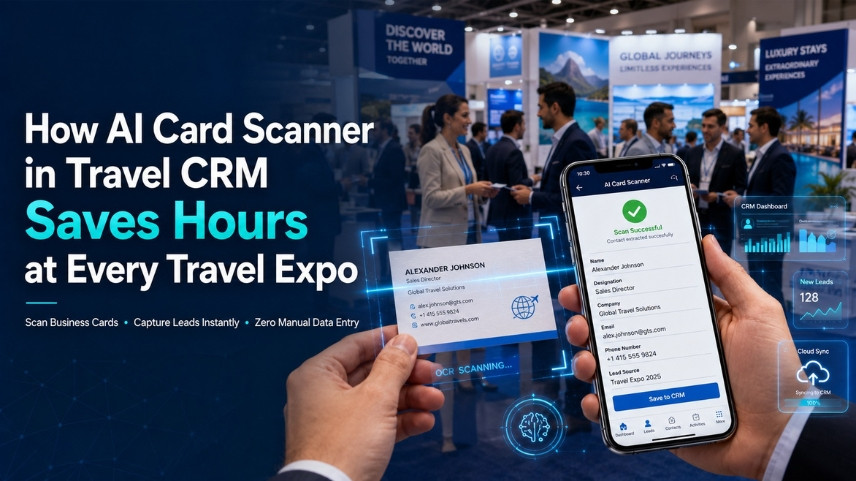
Travel expos are where deals begin. Hundreds of agents, hoteliers, tour operators, and DMCs walk the floor, exchange visiting cards, and promise to "follow up next week." The problem? By the time most teams are back at their desks, half those cards are lost in a bag, half the names are forgotten, and the leads that could have become bookings quietly go cold.
This is exactly the gap an AI Card Scanner inside a Travel CRM closes — and it's changing how travel businesses work expos, roadshows, and networking events. In an industry where a single good lead from a three-day event like SATTE, OTM, or an IATO roadshow can turn into a six-figure contract, the way that lead is captured, stored, and followed up on matters just as much as the conversation itself.
In this article, we'll break down exactly why traditional visiting-card collection fails travel businesses, how an AI-powered card scanner changes the math, and what the actual, measurable time and revenue impact looks like — expo after expo.
AI Travel CRM
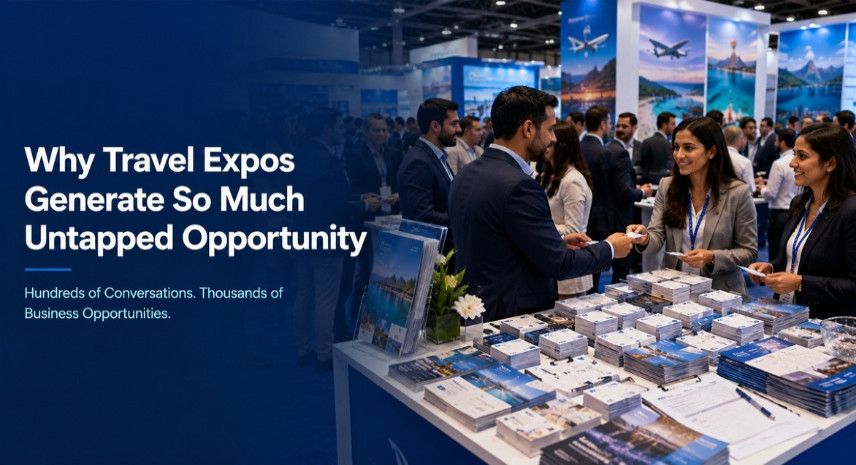
Before Getting Into The Solution, It's Worth Understanding The Scale Of The Problem. A Mid-sized Travel Agency Exhibiting At A Major Expo Will Typically:
Every One Of Those Cards Represents A Person Who Was Interested Enough To Hand Over Their Contact Details In Person — Arguably One Of The Highest-intent Leads A Travel Business Can Get, Warmer Than Most Website Form-fills Or Cold Outreach. Yet This Is Precisely The Category Of Lead That Gets Mishandled The Most, Simply Because Of How It's Captured: On Paper, In A Noisy, Fast-moving Environment, With No System Behind It Until Someone Manually Sits Down To Enter It Later.
Anyone Who Has Manned A Booth At A Travel Expo Knows The Drill:
Multiply This Across A Whole Team Working The Booth, And The Business Is Sitting On Dozens — Sometimes Hundreds — Of Hours Of Manual Work Every Expo Season, With No Guarantee The Data Is Even Accurate.
Most Travel Businesses Measure Expo ROI By Counting Leads Collected. Very Few Measure How Many Of Those Leads Were Actually entered Correctly And Followed Up On Time. In Reality:
In Other Words, The Expo Budget — Booth Cost, Travel, Staff Time, Marketing Collateral — Has Already Been Spent. The Only Thing Standing Between That Spend And An Actual Booking Is How Quickly And Accurately Those Leads Get Into A System Where Someone Can Act On Them. This Is Where Most Travel Businesses Quietly Lose Money Without Realizing It.
An AI Card Scanner Built Into A Travel CRM Removes The Manual Step Entirely. Instead Of Typing Details, An Agent Simply:
What Used To Take 3–4 Minutes Of Manual Entry Per Card Now Takes Seconds. For A Team Collecting 150–200 Cards Over An Expo, That's The Difference Between Hours Of Admin Work And A Few Minutes Of Scanning Between Conversations.
The Time Saved Isn't Just In Typing — It Shows Up Across The Entire Lead Journey:
1. Zero Data-entry Backlog After The Event Instead Of A Team Spending The Week After An Expo Entering Cards Into Excel, Every Lead Is Already In The CRM, Formatted Correctly, Before The Booth Even Closes For The Day.
2. Instant Lead Qualification Because Leads Land In The CRM Immediately, Sales Teams Can Sort, Tag, And Prioritize Hot Prospects (say, A Hotelier Interested In A B2B Portal) While The Conversation Is Still Fresh In Memory — Not Two Weeks Later.
3. Faster Follow-ups, Higher Conversions Speed Matters In Travel Sales. A Lead Followed Up Within 24 Hours Converts Far Better Than One Contacted A Week Later After The Excitement Of The Expo Has Faded. Automated Capture Means The Follow-up Email Or WhatsApp Message Can Go Out The Same Evening.
4. No Lost Or Duplicate Leads Physical Cards Get Lost; Digital Records Don't. And Since The CRM Checks Against Existing Contacts, The Same Lead Scanned By Two Team Members Doesn't Create Duplicate, Conflicting Entries.
5. Clean, Structured Data For Reporting Every Card Scanned Becomes Structured Data — Searchable, Exportable, And Tied To The Specific Event. This Makes It Easy To Measure ROI On The Expo Itself: How Many Leads Came In, How Many Converted, And Whether The Booth Was Worth The Spend Next Year.
6. Less Physical Stress On The Team Anyone Who Has Worked A Three-day Expo Knows The Exhaustion Of Standing At A Booth All Day, On Top Of Managing A Bag Full Of Cards, Notes, And Brochures. Removing The "don't Lose This Card" Anxiety, And The Evening Ritual Of Sorting Through A Stack Of Cards Back At The Hotel, Genuinely Reduces The Operational Load On Staff — Letting Them Focus On Conversations Instead Of Paperwork.
Consider A Travel Agency Sending A Three-person Team To A Two-day Travel Expo, With Each Person Having Around 15–20 Meaningful Conversations A Day.
Without An AI Card Scanner:
With An AI Card Scanner In The CRM:
The Difference Isn't Just The 4–6 Hours Of Manual Entry Saved — It's The 7–10 Days Of Lost Momentum That No Longer Happens. In A Competitive Space Like Travel Sales, That Head Start Alone Can Be The Deciding Factor In Who Wins The Booking.
The Value Of An AI Card Scanner Doesn't End When The Expo Does. Because Every Scanned Card Becomes A Structured CRM Record Rather Than A Static Contact, That Data Continues To Be Useful Long After The Event:
This Turns A Physical Networking Event Into A Long-term, Measurable Marketing Channel — Something That's Almost Impossible To Do When Leads Live In Scattered Spreadsheets Or, Worse, In A Box Of Business Cards In Someone's Desk Drawer.
Travel Is A Relationship-driven, High-volume-lead Industry. Agencies And DMCs Don't Just Collect A Handful Of Leads At An Expo — They Collect Hundreds, Often Across Multiple Staff Members And Multiple Days. Losing Even 20% Of Those Cards To Disorganization Is A Direct Loss Of Potential Bookings.
A CRM Built Specifically For Travel — One That Understands Leads, Quotations, Supplier Communication, And Bookings As A Connected Workflow — Makes The Card Scanner Far More Powerful Than A Generic Contact-scanning App. The Moment A Card Is Scanned, That Lead Can Flow Straight Into Quotation Building, Supplier Follow-up, And Booking Management, All Inside The Same System.
This Is The Approach Platforms Like TravoByte Have Built Into Their AI-powered Travel CRM. TravoByte's AI Card Scanner Lets Agents Capture A Visiting Card On The Spot, Have AI Extract And Structure The Details, Tag The Lead Source, And Save It Directly Into The CRM — Ready For Follow-up, Quotation, And Booking, Without A Single Manual Entry. For Agencies Already Using TravoByte For Lead Management, Quotations, And Supplier Communication, This Means Expo Leads Plug Straight Into The Same System The Sales Team Already Works In Every Day — No Separate App, No Export-import Step, No Lost Time.
An AI Card Scanner Doesn't Just Digitize A Stack Of Paper — It Compresses Days Of Post-expo Admin Work Into Minutes, Keeps Every Lead Accurate And Traceable, And Lets Travel Teams Act On Interest While It's Still Warm. For Any Travel Agency, Tour Operator, Or Hotelier That Regularly Works Expos And Roadshows, This Single Feature Can Be The Difference Between An Expo That Generates Real Bookings And One That Generates A Drawer Full Of Forgotten Business Cards.
If Your Team Is Still Typing Visiting Cards Into Spreadsheets After Every Event, It's Worth Asking: How Many Hours — And How Many Leads — Is That Costing You Every Single Expo Season?